Minoxidil and its compounded formulations are the most prescribed medicines for hair loss; however, pharmacists face many challenges preparing a base solution to dissolve high concentrations of Minoxidil.
To solve the mentioned issue, La farrerr formulated Rosexidil, which not only is an Herbal Hair Revival Tonic, but also is considered a base to dissolve high concentrations of Minoxidil.
Benefits:
- Dissolves Minoxidil Up to 10% (w/v) With Entire Stability
- Dissolves Minoxidil Rapidly (Less than 2 min) Without Requiring Heat
- Strengthens and Stimulates Hair Regrowth
- Reduces DHT Levels and Inhibits the Factors Affecting Hair Loss
- Accelerates Blood Circulation and Oxygenation to Hair Follicles
- Repairs and Regenerates Damaged Hair Roots
- Provides Moisture and Regenerates the Scalp
- Makes Hair Thicker and Fuller
- Soothes Scalp Inflammation
Play This Video for More Information:
Active Ingredients of Rosexidil
Minoxidil in Compounded Formulations
Hair loss is a common dermatological condition that affects both men and women of all ages. In addition to supplements, clinical and surgical treatments, compounded formulations with Minoxidil are also prescribed. Minoxidil is the only FDA-Approved topical solution to slow or stop hair loss. Moreover, the presence of Minoxidil in a topical formulation based on natural compounds such as caffeine would be more effective. According to a clinical study on 60 patients, after 120 days of treatment, the combined solution was more effective than Minoxidil alone, in terms of patients’ satisfaction (58.33% in combined treatment versus 41.37% in Minoxidil alone control group) [1].
While many dermatologists prescribe compounded formulations with Minoxidil, pharmacists face many challenges preparing the solution. For example, it is challenging to prepare a base solution that can dissolve high Minoxidil concentrations (5%-10%) without requiring heat. On the other hand, 60% to 70% of the base solution is a mixture of alcohols that causes inflammation, itchiness, and dry scalp. Hence, the availability of an herbal base tonic with unique ability to dissolve high concentrations of Minoxidil without mentioned side effects has been a subject of debate [2].
La farrerr formulated an effective herbal Hair Revival Tonic to prevent hair loss and stimulate hair growth. The main advantage that distinguishes Rosexidil from other similar commercial products is its ability to dissolve Minoxidil (Fig. 1):
- Up to 10% (w/v)
- Less than 2 minutes
- With entire stability
- Without requiring heat
- Without sedimentation until the end of consumption period
Besides, enough empty volume in the bottle is considered to dissolve Minoxidil powder and other medications.

Fig. 1 Rapid dissolution of Minoxidil (Less than 2 min) without requiring heat with entire stability. (A) Rosexidil and Minoxidil Powder, (B) Adding Minoxidil powder to Rosexidil (65 mL) and (C) Final Rosexidil solution after 2 min.
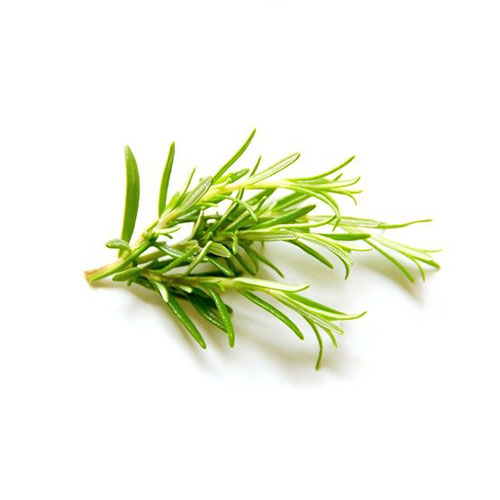
- Rosmarinus officinalis (Rosemary) Essential Oil
Rosemary as an ancient plant with bactericidal, antifungal, and antioxidant properties is considered medicine in the European Pharmacopoeia. Mentioned properties of Rosemary have been mainly attributed to its significant diterpenes carnosol, ursolic acid, carnosic acid, phenolic acids (rosmarinic acid) and the essential oil components. Rosemary, also by increasing blood circulation helps hair follicles grow [3].
Its anti-alopecia properties are being studied in a group, and a sample pre-trial and post-trial scalp photograph are shown in Fig. 2 (A) and (B) [4].

Fig. 2 Effectiveness of Rosemary on a sample:
(A) Pre-trial and (B) Post-trial scalp photograph [4].
Scientists compared the effectiveness of Rosemary with Minoxidil on a group of men and women, having half of them apply Minoxidil and Rosemary for the other half. As shown in Fig. 3, both groups experienced a significant increase in hair count at the 6-months endpoint compared with the baseline and 3-months endpoint. The results showed that Rosemary was as effective as Minoxidil [4].
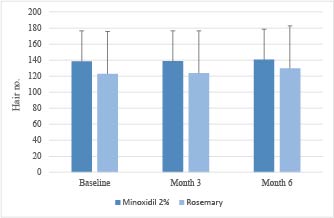
Fig. 3 Comparison of hair count between the Rosemary and Minoxidil groups at different intervals [4].
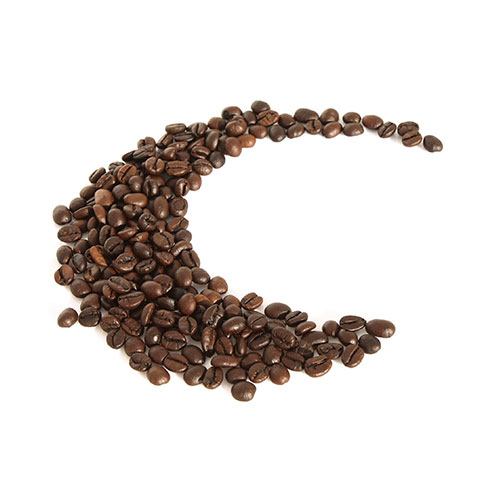
- Encapsulated Caffeine
Caffeine is well known for its excellent skin penetration properties. Transfer of caffeine promising effects on the hair follicle in vitro to an in vivo setting requires that caffeine reaches the desired target tissue with controlled release, which can be achieved by encapsulated caffeine.
The natural ingredients of caffeine has proven to be efficient and active against hair loss in topical cosmetic formulations for Androgenic Alopecia (AGA) treatment according to European S3 Guideline [5].
The caffeine-induced inhibition of phosphodiesterase (PDE) enzymes increases intracellular cyclic adenosine monophosphate (cAMP) concentrations, resulting in stimulatory effects on cell metabolism and proliferation [6]. Moreover, caffeine increases the microcirculation of blood and stimulates hair growth by inhibiting the 5α-reductase activity [7]. Besides, caffeine affects stimulation and inhibition of hair cycle regulation factors, shown in Fig. 4 [8].
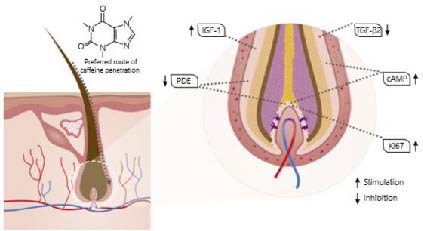
Fig. 4 Caffeine’s impact on hair cycle regulation factors: IGF-1 (insulin-like growth factor-1) outer root sheath, cAMP (cyclic adenosine monophosphate) hair matrix and outer root sheath, PDE (phosphodiesterase) hair matrix and outer root sheath, TGF-β2 (transforming growth factor beta-2) outer root sheath, Ki67 antigen KI-67 or MKI67 (Ki-Kiel) hair matrix [8].
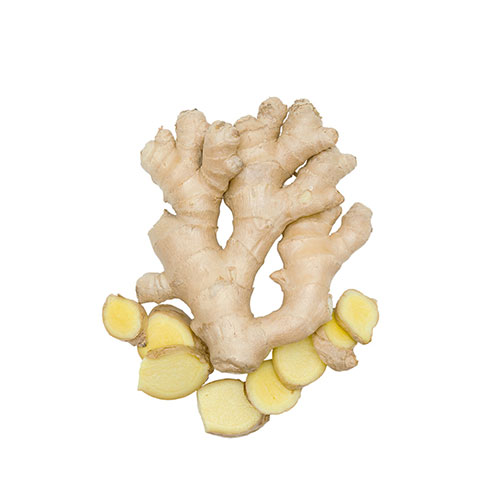
- Zingiber Officinale (Ginger) Root Oil
In East Asia, ginger has been used traditionally to stimulate hair growth. Potassium, magnesium, and vitamins present in the rhizome make the hair stronger and healthier. It is also rich in fatty acids such as linoleic acid that nourish the hair and prevent hair thinning and hair loss. Moreover, natural antiseptic property of ginger root oil helps to inhibit yeast growth and itchiness caused by dandruff [9]. Studies show that main components of ginger oil is as effective as minoxidil to stimulate hair growth [10].
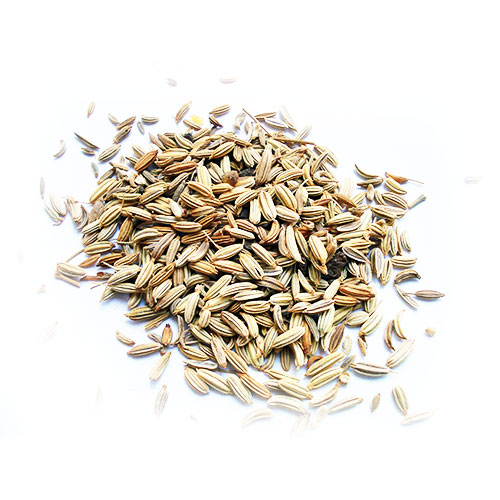
- Foeniculum Vulgare (Fennel) Seed Extract
Fennel seed is rich in vitamin C, magnesium, calcium, phosphorus, and iron that nourishes the scalp and strengthens the follicles. It is a powerful antioxidant as it contains some natural antioxidant compounds called kaemferol and quercetin, which help combating harmful free radicals. Regular use of fennel seed prevents hair fall by providing relief from itchy scalp and dandruff [11].
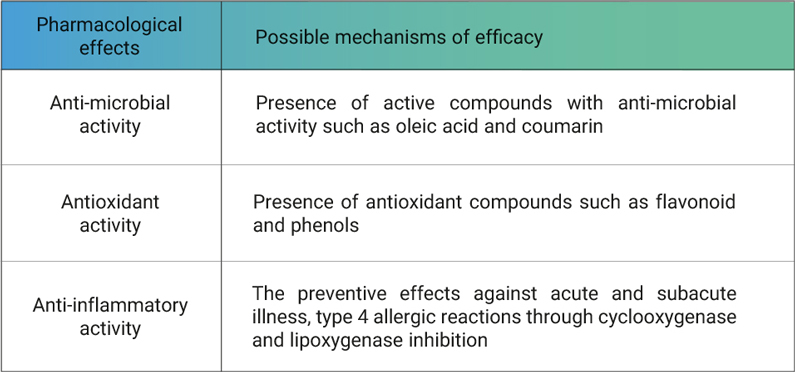
Pharmacological properties of fennel extract and their efficacy are shown in Table 1 [12].
Table 1 The potential mechanisms of some fennel pharmacologic properties [12]
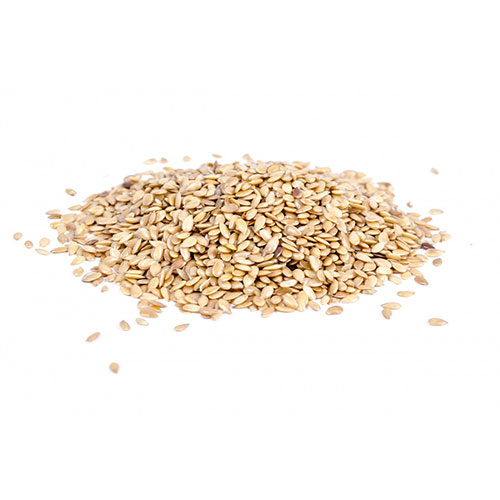
- Sesamum Indicum (Sesame) Seed Oil
Traditionally, sesame seed oil is used as an alternative medicine to blacken the hair. High levels of natural antioxidants, oleic and linoleic fatty acids, vitamin E, K, B complex present in this oil, nourish the hair root, encourage healthy hair growth, and improve elasticity. It is also rich in amino acids and has antioxidant properties to help repair the hair and scalp [13].
In order to evaluate the effect of sesame oil on hair growth, its topical treatment was investigated on a male with three months history of Alopecia Areata (AA) (Fig. 5A). The results on hair growth after two months and three months are shown in Fig. 5 (b) and (c), respectively [14]

Fig. 5 The effect of sesame oil on hair growth [14].
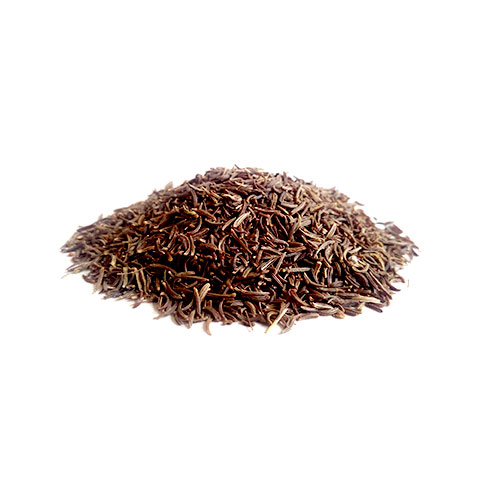
- Nigella sativa (Black Cumin) Seed Oil
Black Cumin seed oil has antifungal, antibacterial, antiviral, and analgesic properties that help maintaining scalp health. It deals with issues like dandruff and soothes skin conditions, such as psoriasis and eczema. Black Cumin seed oil contains over 100 different nutrients that keeps the scalp moisturized, nourishes the follicles, balances oil production, and treats hair fall [15]. Besides, its principal constituent, thymoquinone (TQ), exerts antioxidant and anti-inflammatory effects by inhibiting pro-inflammatory mediators, such as cyclooxygenase and prostaglandin D2 [16]. Anti-inflammatory effects have been studied in Patients treated with Black Cumin seed oil and placebo, respectively.
The results in patients treated with Black Cumin seed oil show complete regression of peripilar signs at the 6-months follow-up (T6), compared to baseline (T0) (Fig. 6 (A)). While, patients treated with placebo show persistent scalp inflammation at the 6-months follow-up (T6), compared to baseline (T0) (Fig. 6 (B)) [16].
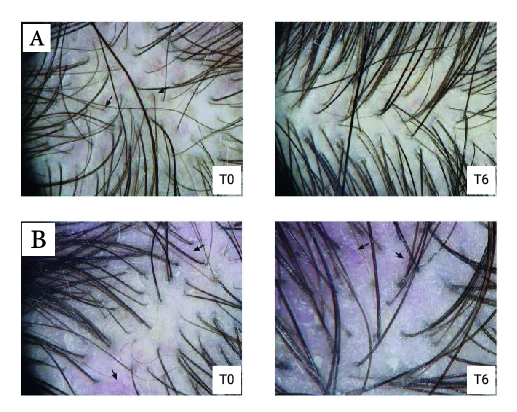
Fig. 6 (A) The results in patients treated with Black Cumin Seed Oil at the six months follow-up (T6), compared to baseline (T0), (B) Patients treated with placebo at the six months follow-up (T6), compared to baseline (T0) [16].
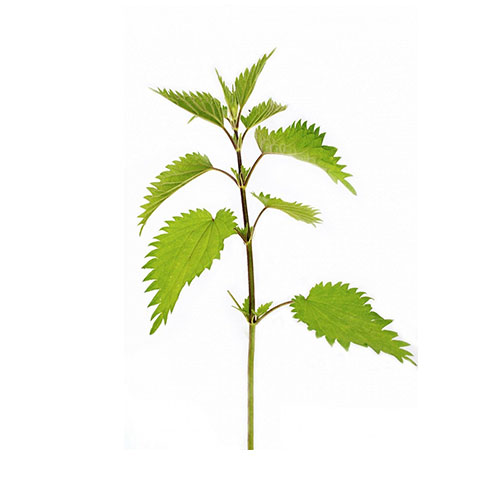
- Urtica dioica (Nettle) Extract
Nettle extract contains high amounts of anti-inflammatory and antioxidant compounds that can protect the scalp from damage and stimulate hair growth [17]. Nettle extract is also rich in minerals like iron, magnesium, and zinc, which can all give follicles a significant boost. Besides the mentioned properties, its anti-aging activity is due to inhibition of degrading enzymes (such as elastase or collagenase) by ursolic acid and quercetin molecules [18].
- Cedrus atlantica (Cedarwood) Bark Oil
Cedarwood Oil is rich in aliphatic unsaturated fatty acids (linolenic, linoleic, palmitoleic, oleic, myristoleic, and stearic acids). These fatty acids have a 5α-reductase inhibitory effect and promote hair regrowth, particularly linolenic acid. This oil enhances blood circulation, tightens the follicles, stimulates healthy growth, and increases hair density and ratio of anagen hair phase. It is also known to cleanse the scalp and remove excess oil, dirt, and dandruff [19].
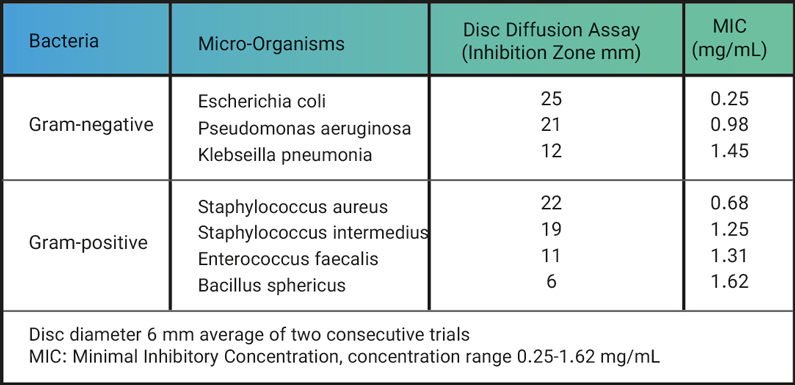
The results of its antibacterial activity on gram-positive and gram-negative bacteria has been reported and are shown in Table 2 [20].
Table 2 Antibacterial activity of Cedarwood oil [20]
REFERENCES
[1] Golpour M, Rabbani H, Farzin D, Azizi F. Comparing the effectiveness of local solution of minoxidil and caffeine 2.5% with local solution of minoxidil 2.5% in treatment of androgenetic alopecia. Journal of Mazandaran University of Medical Sciences. 2013 Nov 10;23(106):30-6. Available from: http://jmums.mazums.ac.ir/article-1-1689-en.html
[2] Gholami K, Akbarzadeh T, Niknam S, Goodarzi N, Kaviani F, Kouti L et al. Pharmaceutical Compounding. Tehran, Iran: Teimourzadeh; 1393.
[3] González-Minero FJ, Bravo-Díaz L, Ayala-Gómez A. Rosmarinus officinalis L.(Rosemary): An Ancient Plant with Uses in Personal Healthcare and Cosmetics. Cosmetics. 2020 Dec;7(4):77. Available from: https://www.mdpi.com/2079-9284/7/4/77
[4] Panahi Y, Taghizadeh M, Marzony ET, Sahebkar A. Rosemary oil vs minoxidil 2% for the treatment of androgenetic alopecia: a randomized comparative trial. Skinmed. 2015;13(1):15. Available from: https://pubmed.ncbi.nlm.nih.gov/25842469/
[5] Blumeyer A, Tosti A, Messenger A, Reygagne P, Del Marmol V, Spuls PI, Trakatelli M, Finner A, Kiesewetter F, Trüeb R, Rzany B. Evidence‐based (S3) guideline for the treatment of androgenetic alopecia in women and in men. JDDG: Journal der Deutschen Dermatologischen Gesellschaft. 2011 Oct;9:S1-57. Available from: https://onlinelibrary.wiley.com/doi/abs/10.1111/j.1610-0379.2011.07802.x
[6] Daniels G, Akram S, Westgate GE, Tamburic S. Can plant‐derived phytochemicals provide symptom relief for hair loss? A critical review. International journal of cosmetic science. 2019 Aug;41(4):332-45. Available from: https://onlinelibrary.wiley.com/doi/full/10.1111/ics.12554
[7] Herman A, Herman AP. Caffeine’s mechanisms of action and its cosmetic use. Skin pharmacology and physiology. 2013;26(1):8-14. Available from: https://www.karger.com/Article/Abstract/343174
[8] Völker JM, Koch N, Becker M, Klenk A. Caffeine and Its Pharmacological Benefits in the Management of Androgenetic Alopecia: A Review. Skin Pharmacology and Physiology. 2020;33(3):93-109. Available from: https://www.karger.com/Article/Abstract/508228
[9] Mahboubi M. Zingiber officinale Rosc. essential oil, a review on its composition and bioactivity. Clinical Phytoscience. 2019 Dec 1;5(1):6. Available from: https://link.springer.com/article/10.1186/s40816-018-0097-4
[10] Trivedi RV. Investigation of hair growth promoting ability of herbal gel containing Zingiber officinale. International Journal of Research in Pharmaceutical Sciences. 2019 Nov 8;10(4):3498-507. Available from: https://pharmascope.org/ijrps/article/view/1724
[11] Deepmala V, SukhrajP, Raaz KM. Fennel: A Spice For Overall Health Welfare. Advance Research in Agriculture and Veterinary Science. 2018 May;5(3):31-37. Available from: http://www.aravsjournal.com/aravs_may2018/8.pdf
[12] Kooti W, Moradi M, Ali-Akbari S, Sharafi-Ahvazi N, Asadi-Samani M, Ashtary-Larky D. Therapeutic and pharmacological potential of Foeniculum vulgare Mill: a review. Journal of HerbMed Pharmacology. 2015 May 26;4(1):1-9. Available from: http://herbmedpharmacol.com/Article/JHP_20150526151629
[13] Miraj S, Kiani S. Bioactivity of Sesamum indicum: A review study. Der Pharmacia Lettre. 2016;8(6):328-34. Available from: http://eprints.skums.ac.ir/844/1/18.pdf
[14] Khalifa ES, Adil. AN, Muna SA. Sesame and Pumpkin Seed Oil are New EffectiveTopical Therapies for Alopecia Areata. American Journal of Dermatology and Venerology. 2019;8(2):28-32. Available from: http://article.sapub.org/10.5923.j.ajdv.20190802.03.html
[15] Sudhir SP, Deshmukh VO, Verma HN. Nigella sativa Seed, a Novel Beauty Care Ingredient: A Review. International Journal of Pharmaceutical Sciences And Research. 2016 Aug 1;7(8):3185. Available from: https://www.researchgate.net/profile/Sudhir_Sawarkar/publication/315474605_Nigella_sativa_seed_a_novel_beauty_care_ingredient_A_review/links/58d13975aca272380eca2205/Nigella-sativa-seed-a-novel-beauty-care-ingredient-A-review.pdf
[16] Rossi A, Priolo L, Iorio A, Vescarelli E, Gerardi M, Campo D, Di Nunno D, Ceccarelli S, Calvieri S, Angeloni A, Marchese C. Evaluation of a therapeutic alternative for telogen effluvium: A pilot study. Available from: https://www.scirp.org/html/2-1050155_35882.htm
[17] Lourith N, Kanlayavattanakul M. Hair loss and herbs for treatment. Journal of cosmetic dermatology. 2013 Sep;12(3):210-22. Available from: https://onlinelibrary.wiley.com/doi/abs/10.1111/jocd.12051
[18]Bourgeois C, Leclerc ÉA, Corbin C, Doussot J, Serrano V, Vanier JR, Seigneuret JM, Auguin D, Pichon C, Lainé É, Hano C. Nettle (Urtica dioica L.) as a source of antioxidant and anti-aging phytochemicals for cosmetic applications. Comptes Rendus Chimie. 2016 Sep 1;19(9):1090-100. Available from: https://www.sciencedirect.com/science/article/pii/S1631074816300790
[19] Herman A, Herman AP. Topically used herbal products for the treatment of hair loss: preclinical and clinical studies. Archives of Dermatological Research. 2017 Oct 1;309(8):595-610. Available from: https://link.springer.com/article/10.1007/s00403-017-1759-7
[20] Derwich E, Benziane Z, Boukir A. Chemical composition and in vitro antibacterial activity of the essential oil of Cedrus atlantica. Int. J. Agric. Biol. 2010 May 1;12(3):381-5. Available from: https://www.researchgate.net/publication/287574807_Chemical_Composition_and_In_Vitro_Antibacterial_Activity_of_the_Essential_Oil_of_Cedrus_atlantica